













What Actually Happens During a Non-Surgical Aesthetic Consultation
Rukshana Hoque
Jan 20, 2026
For many people, booking an aesthetic consultation feels like a bigger step than the treatment itself. Long before an appointment is made, questions tend to surface: Will I be pressured into something? Do I need to know what treatment I want? What if I’m not suitable?
These concerns are completely normal, particularly for those exploring non-surgical aesthetic treatments for the first time. A consultation is often misunderstood as a sales appointment, when in reality it is designed to be an information-led discussion focused on understanding concerns, assessing suitability, and offering clarity — not commitment.
Knowing what actually happens during a consultation can help remove uncertainty and make the process feel far more approachable.
A consultation is about understanding, not convincing
One of the most common misconceptions is that booking a consultation means committing to treatment. In practice, a consultation is simply a conversation. It gives both you and the practitioner an opportunity to explore whether treatment is appropriate, and if so, what approach might make sense.
Many people attend a consultation without knowing what treatment they want — or even whether they want treatment at all. Others arrive with a specific concern in mind but are unsure how it can be addressed safely or naturally. Both scenarios are entirely normal.
In some cases, no treatment is recommended. This may be due to anatomy, skin condition, medical history, or the nature of the concern itself. Ethical aesthetic practice prioritises suitability and safety, even if that means advising against treatment.
Talking through your concerns (in your own words)
Early in the consultation, you’ll usually be asked what prompted you to book. This isn’t about identifying a product or procedure — it’s about understanding how you perceive the changes you’re noticing.
Some people mention specific issues, such as looking tired, noticing lines that linger longer than they used to, or feeling that their face has lost definition. Others find it harder to pinpoint and simply feel that their appearance has changed.
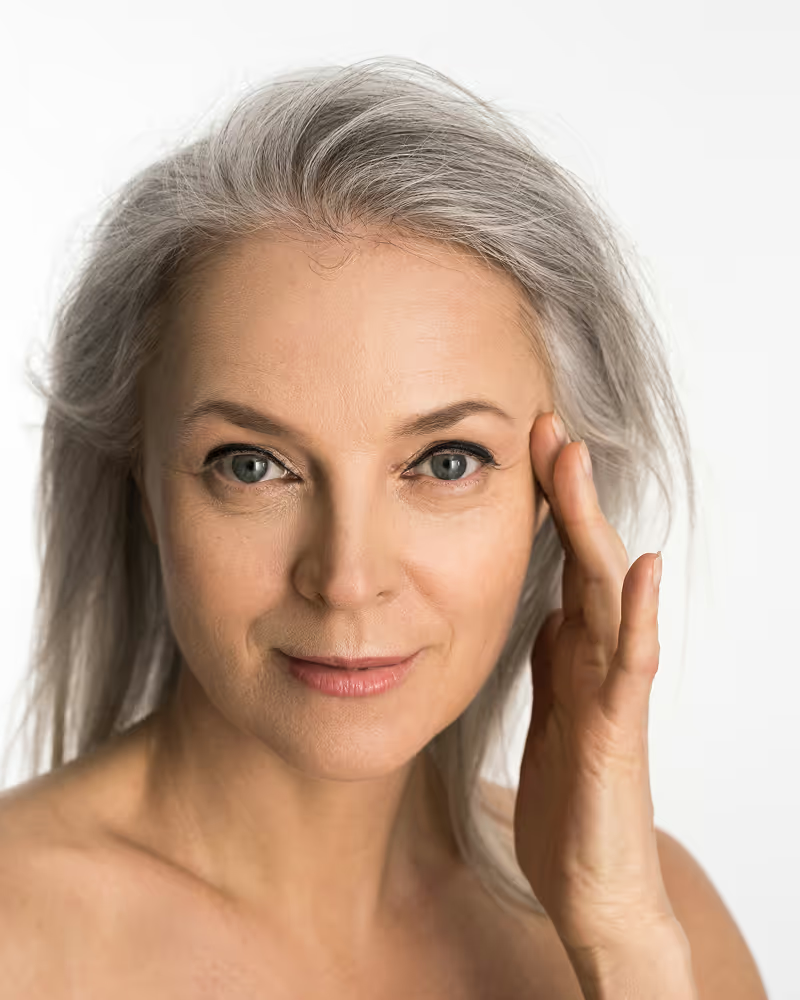
These descriptions often relate to broader patterns of facial ageing, which tend to involve a combination of skin, muscle, and structural changes rather than a single issue. A practitioner’s role is to listen for these patterns and help clarify what may be contributing to them.
Why assessment goes beyond the skin surface
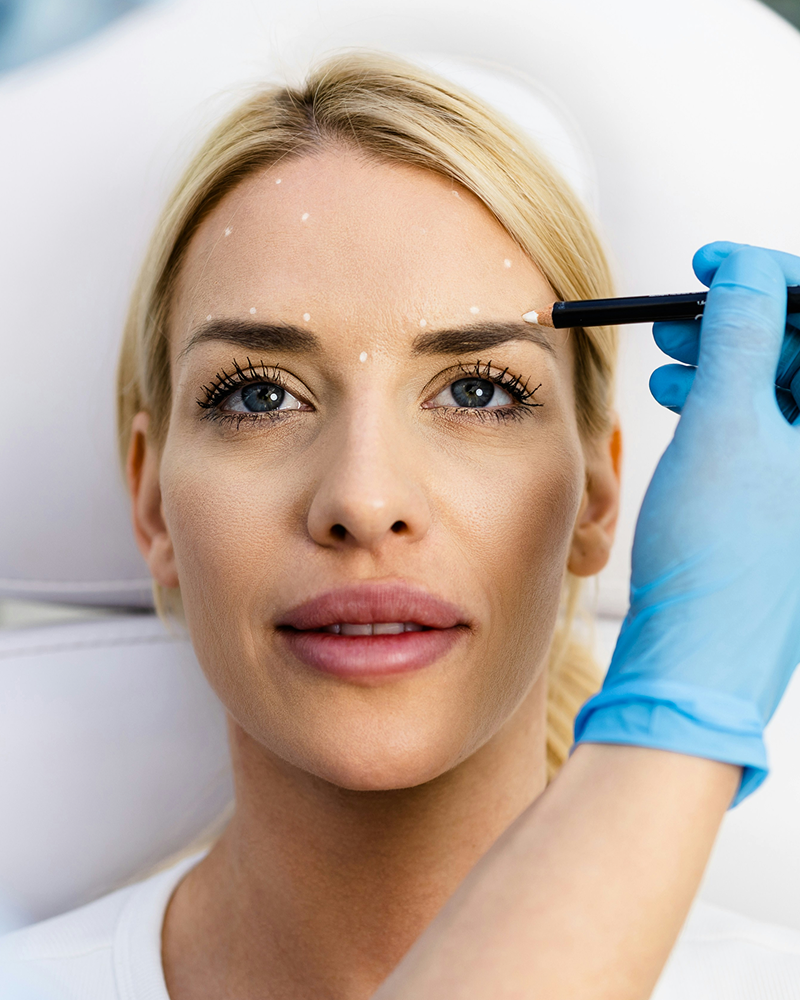
An aesthetic consultation involves more than assessing the skin alone. Facial structure, muscle movement, skin quality, and balance are all considered together.
This is why practitioners may observe how your face moves when you speak or smile, how light reflects off different areas, or how features relate to one another at rest. For example, a concern that appears to be a “wrinkle issue” may actually be influenced by volume loss or reduced skin quality.
Medical history is also an essential part of the assessment. Certain treatments may not be suitable depending on health conditions, medications, or previous aesthetic procedures. This information helps guide safe and appropriate recommendations.
Understanding different treatment categories
If treatment options are appropriate, they are usually discussed in broad categories first, rather than as a long list of procedures.
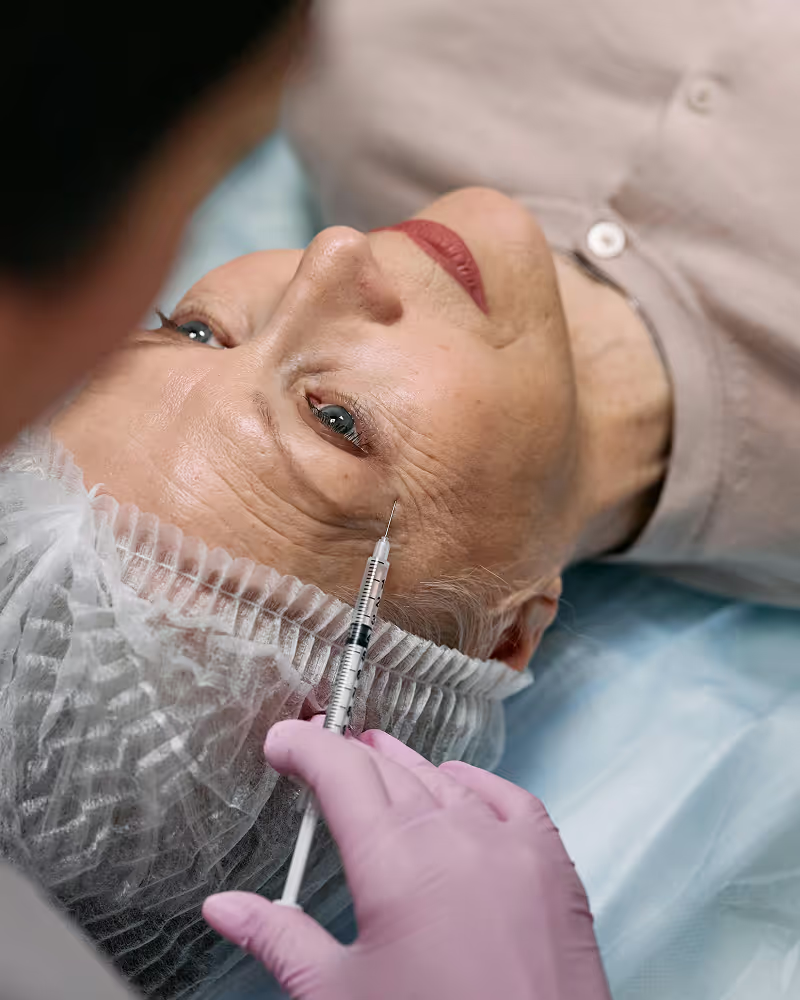
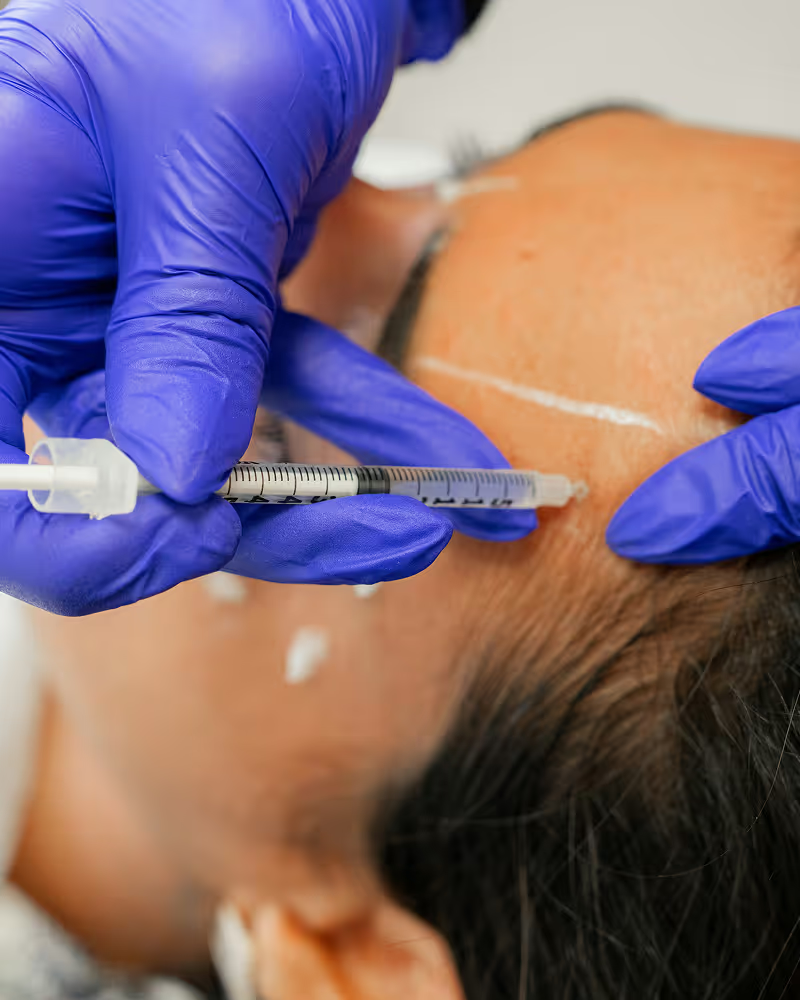
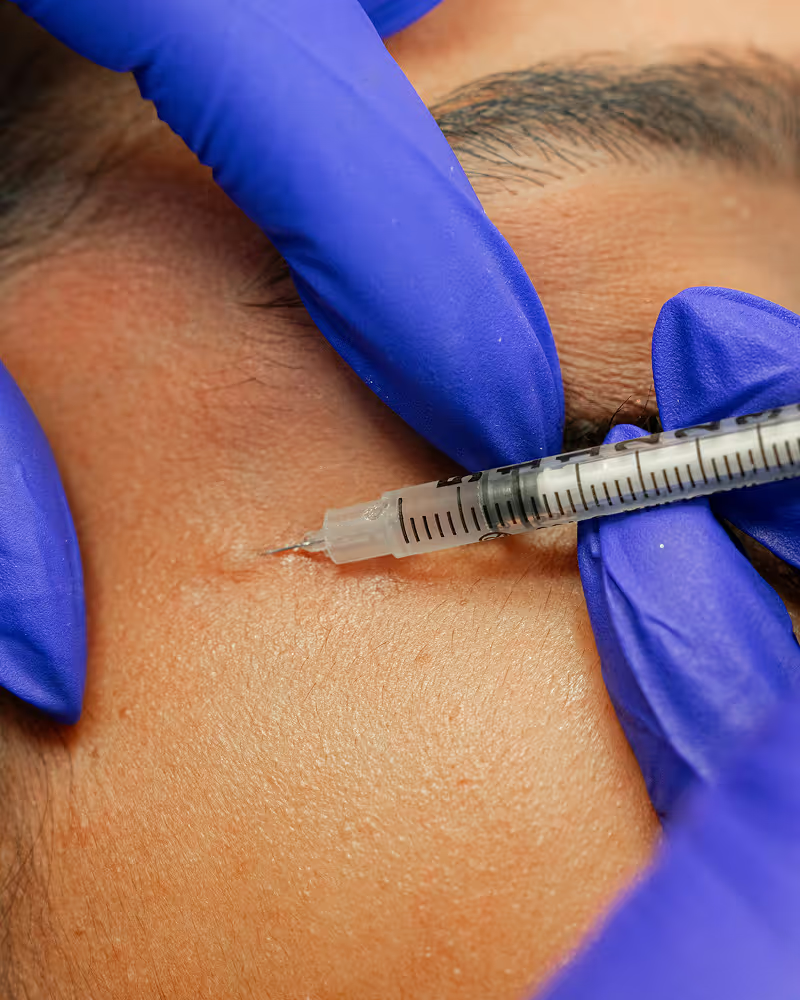
Some treatments focus on muscle movement. These are commonly explored when expression lines are the main concern and may involve injectable options designed to soften repetitive muscle activity, such as anti-wrinkle injections.
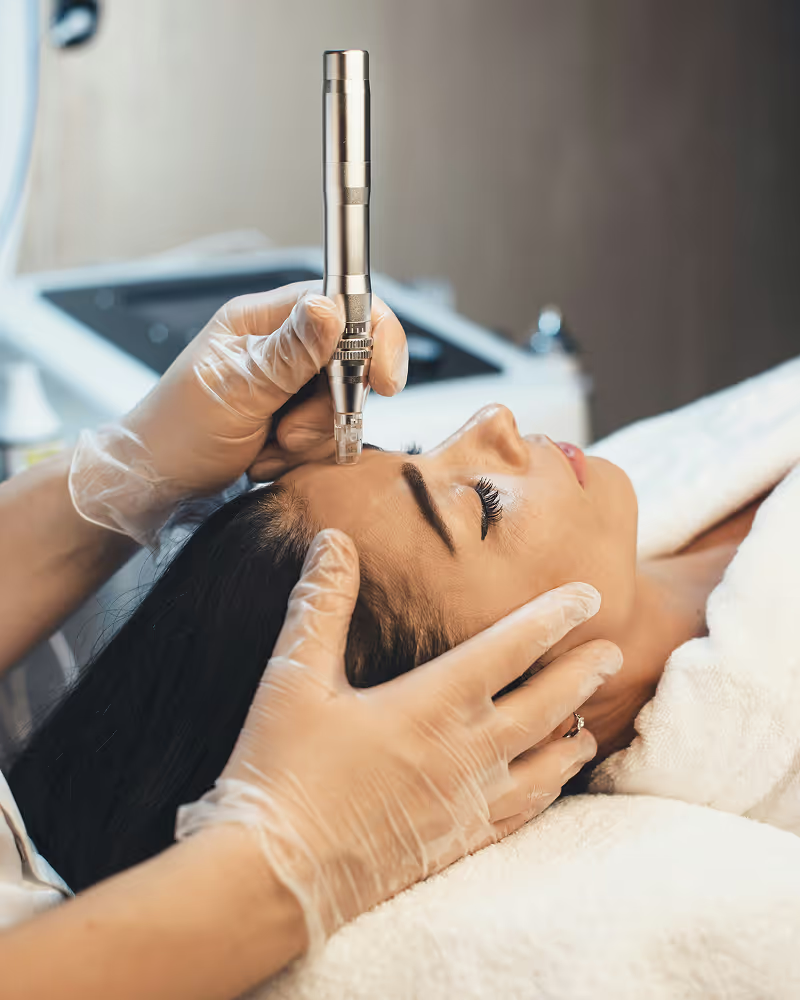
Other treatments are skin-focused. These aim to improve hydration, texture, and elasticity, often discussed in the context of concerns like uneven skin texture and dullness. Regenerative or biostimulatory treatments may fall into this category.
There are also treatments that address structural support and volume, which may be discussed if facial contours have changed over time. These approaches are typically conservative and focused on restoring balance rather than altering features.
A broader overview of how these options fit together is usually available on the clinic’s treatments page, which many people find useful to review after their consultation.
Why one concern rarely equals one treatment
A key part of a good consultation is explaining why a single concern often doesn’t have a single solution. Facial changes are interconnected. For example, under-eye tiredness may be influenced by skin quality, volume changes, and facial structure rather than one isolated issue.
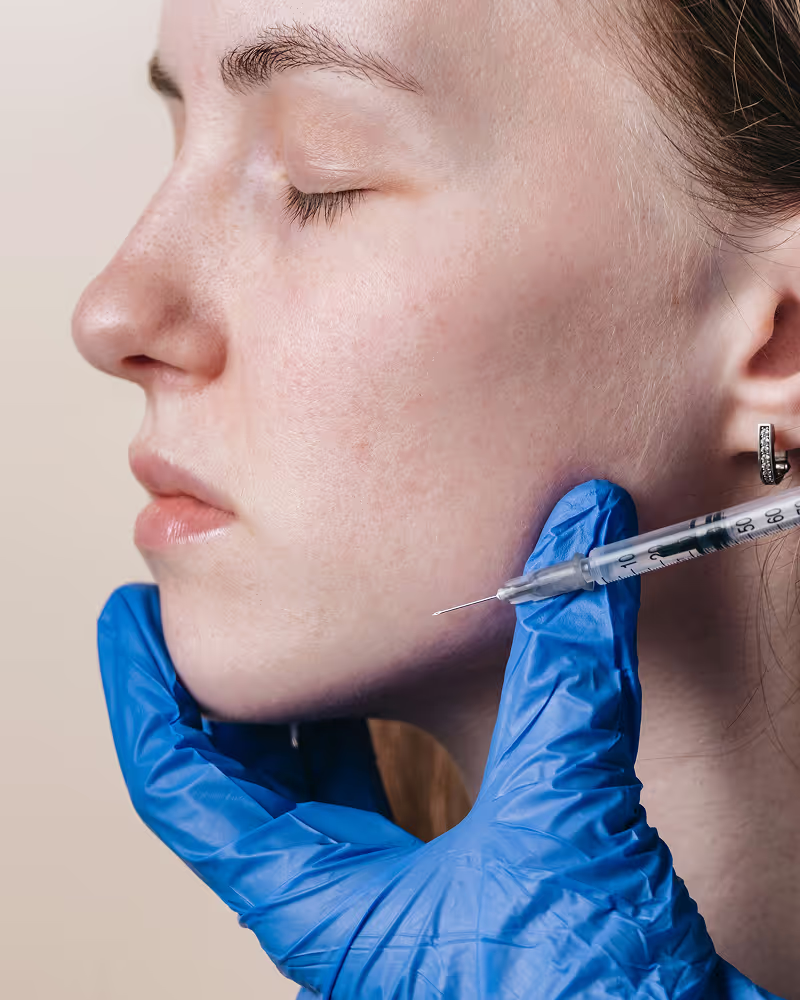
This is why under-eye concerns are often approached as part of a wider facial assessment rather than treated in isolation. Similarly, changes in jawline definition may be influenced by skin laxity, muscle activity, and volume distribution together.
Understanding this helps set realistic expectations and reduces the risk of over-treating one area while neglecting others.
Building a personalised plan (if appropriate)
If you decide to proceed with treatment, a personalised plan may be suggested. This does not usually mean doing everything at once. In many cases, treatments are staged or combined gradually to allow for natural adaptation.
Some people prefer to start conservatively, addressing one concern first and reassessing later. Others explore more comprehensive approaches, sometimes referred to as full facial rejuvenation, which consider multiple aspects of facial ageing together.
Importantly, a treatment plan should always feel flexible. It should reflect your comfort level, priorities, and lifestyle — not a rigid protocol.
Questions you should feel comfortable asking
A consultation is also your opportunity to ask questions. These might include:
- What changes you can realistically expect
- How long results may last
- Whether downtime is involved
- How treatments fit into long-term maintenance
- What alternatives exist
Feeling informed is essential before making any decision. You should never feel rushed or discouraged from asking questions.
Taking time after the consultation
Not everyone books treatment immediately after a consultation. Some people prefer to take time to reflect, review information, or discuss options with a partner or friend. This is completely normal.
Many clinics provide written information or direct patients to online resources so they can revisit details at their own pace. Reviewing treatment pages, condition information, and pricing in your own time often helps decisions feel more confident and considered.
If you decide to move forward later, appointments can usually be arranged through the contact page, view pricing information, or book a consultation directly through our online booking system. For quick questions before booking, you can also reach out via WhatsApp.
Final thoughts
A non-surgical aesthetic consultation isn’t about being sold a treatment. It’s about understanding concerns, assessing suitability, and providing clear, honest information in a supportive environment.
Whether or not you choose to proceed, a good consultation should leave you feeling heard, informed, and comfortable with your options. For many people, that clarity alone makes the appointment worthwhile.
.svg)